Boosting Warehouse Productivity: Smart Strategies That Work
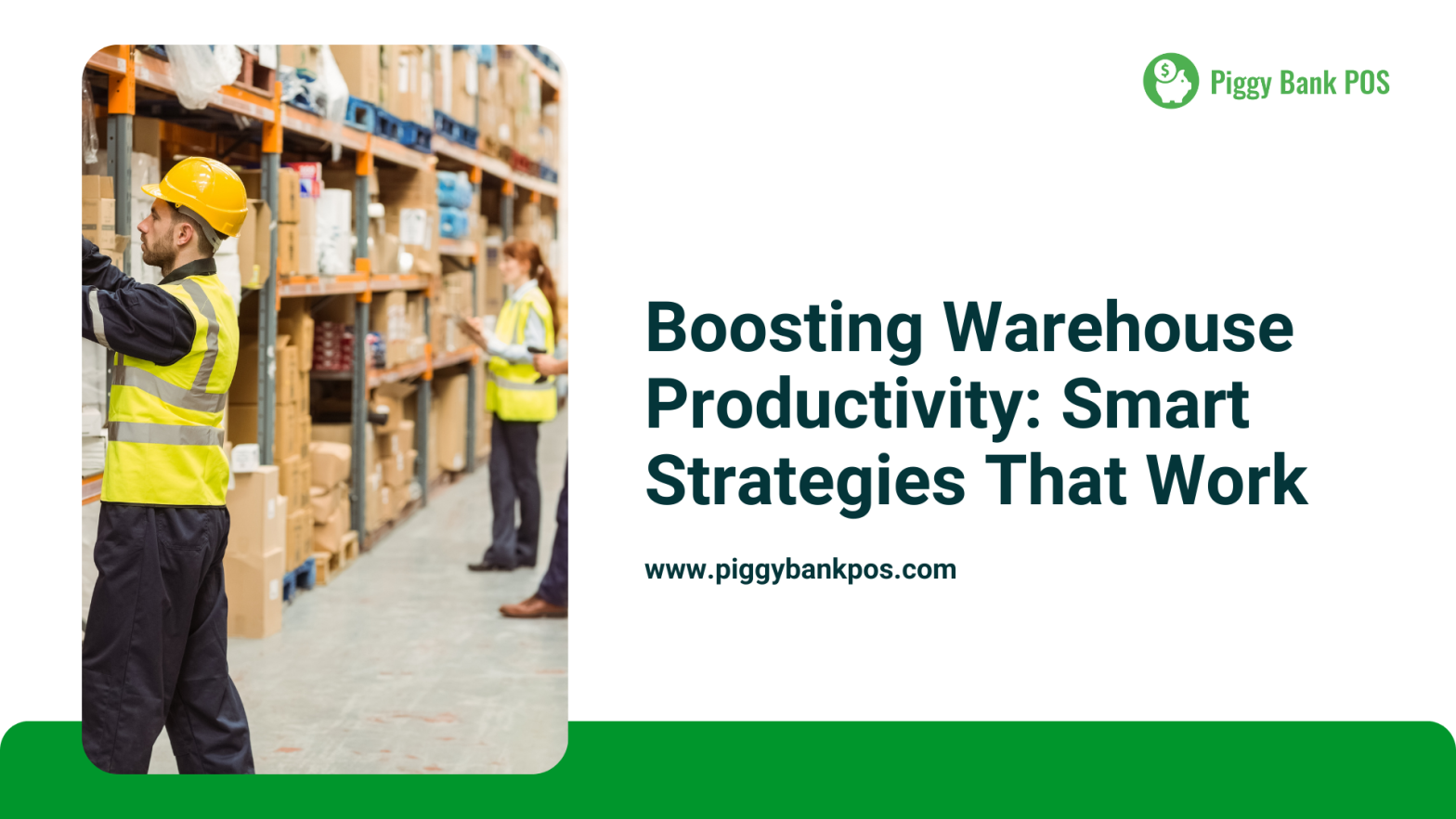
In today’s fast-paced retail and distribution world, warehouse efficiency isn’t just about speed — it’s about accuracy, cost control, and smarter operations. Whether you manage a small storage space or a large distribution center, even small improvements can lead to major gains in profitability.
Here’s how you can boost your warehouse productivity with smart, proven strategies:
1. Embrace Inventory Technology
Manual tracking systems leave too much room for error. Modern POS systems, like Piggy Bank POS, integrate real-time inventory tracking, sales data, and low-stock alerts to keep you fully informed. Knowing exactly what’s moving — and what’s sitting — helps you reorder smarter and avoid costly overstock.
🛠 Pro Tip: Use inventory reports and trend forecasting to anticipate demand, especially around seasonal changes.
2. Optimize Warehouse Layout
The physical setup of your warehouse plays a huge role in efficiency. Frequently picked items should be stored near the front, while slower-moving stock can be placed further back. Clear labeling, wide aisles, and logical groupings can drastically reduce picking time.
📦 Pro Tip: Implement a “Golden Zone” — an area where your fastest-moving products are stored within easy reach.
3. Implement Standardized Procedures
Inconsistent workflows create confusion and slowdowns. Document clear procedures for picking, packing, shipping, and returns. Train your staff consistently to ensure everyone knows the most efficient way to work.
📋 Pro Tip: Post quick-reference guides in key areas of your warehouse for easy reminders.
4. Use Data to Predict and Plan
Historical sales data isn’t just for accounting — it’s your crystal ball for planning! Analyze past trends to predict high-demand periods and adjust your stock levels accordingly.
🔍 Pro Tip: Review your sales reports monthly to spot shifting trends before they surprise you.
5. Automate Where Possible
Automation doesn’t have to mean expensive robots. Small automations, like barcode scanning, automated reordering alerts, or mobile POS inventory apps, can save hours every week.
⚡ Pro Tip: Invest in systems that scale with you — starting small can lead to big results over time.
6. Prioritize Staff Training and Morale
Happy, well-trained employees are more productive. Provide regular training sessions, create incentive programs, and make the warehouse a safe, positive environment to work in.
🎯 Pro Tip: Ask your team for feedback on bottlenecks — they often know exactly where the slowdowns are happening.
Conclusion
Boosting warehouse productivity is a combination of smart technology, organized processes, and engaged teams. With the right strategies — and tools like Piggy Bank POS to give you real-time insights — you can create a warehouse that’s fast, accurate, and built for growth.
Ready to streamline your operations and boost your profits?
👉 Visit www.piggybankpos.com to see how we can help!
Releted Posts

Retail POS Solutions: How to Improve Checkout Speed & Customer Satisfaction
In a retail environment, speed and convenience are key to keeping customers happy. A slow checkout process can lead to frustration, abandoned purchases, and lost sales. With the right POS system, retailers can reduce wait
Why More Retailers Are Switching to Cloud-Based POS in 2025
Retailers are facing more pressure than ever to adapt to changing customer expectations, manage operations efficiently, and stay competitive in an increasingly digital world. One of the most important upgrades businesses are making? Switching from